Dreaming about a second home in Bellingham? You are not alone. For many buyers, the appeal is easy to understand: bay views, mountain backdrops, trail access, and a setting that feels like a true Pacific Northwest retreat without being too far from major metro areas. If you are considering a getaway property here, it helps to understand how use, financing, maintenance, and local rules can shape your decision before you start touring homes. Let’s dive in.
Why Bellingham draws second-home buyers
Bellingham offers a mix of scenery, recreation, and regional access that makes it stand out as a retreat market. The city sits on Bellingham Bay with Mount Baker in the background, about 90 miles from Seattle, 52 miles from Vancouver, B.C., and 21 miles from the Canadian border.
That location is part of the appeal, but so is the outdoor lifestyle. The city reports 68.7 miles of trails, 61.1 miles of bike lanes, and thousands of acres of park land. For many buyers, that combination supports a second home that feels active, scenic, and easy to enjoy throughout the year.
Whatcom County adds to that appeal with extensive shoreline resources. The county says its shoreline jurisdiction includes more than 130 miles of marine shoreline, more than 60 miles of lake shoreline, and more than 220 miles of stream channels. In practical terms, that means you may find compelling options near water, but those same properties often come with more review and regulation.
Understand Bellingham market expectations
If you are shopping for a retreat in Bellingham, it is important to go in with realistic price and pace expectations. Zillow estimated Bellingham’s average home value at $668,589 as of March 31, 2026, and reported homes going pending in about 16 days.
That does not make Bellingham unattainable, but it does suggest a market that can move quickly. A second-home purchase here is usually less about finding a bargain getaway and more about making a thoughtful purchase in a competitive, higher-cost market.
Decide how you will use the home
Before you compare neighborhoods, floor plans, or view corridors, define how you want to use the property. This step matters because intended use can affect financing, property selection, and whether future rental plans are realistic.
A useful way to think about it is to separate your search into three paths:
- Personal retreat only
- Occasional family use with no rental intent
- A home where rental flexibility may matter later
That distinction is especially important in Bellingham because short-term rental rules are not the same as standard ownership rules. If you assume you can rent the home later without checking the facts first, you could narrow your options after closing rather than expand them.
What lenders often expect for a second home
Fannie Mae’s second-home guidance says the property must be occupied by you for some portion of the year. It must also be a one-unit dwelling, suitable for year-round occupancy, under your exclusive control, and not treated as rental property, a timeshare, or a home subject to a management agreement that controls occupancy.
Fannie Mae also notes that if rental income exists, it cannot be used for qualifying if the loan is being delivered as a second home. In simple terms, if your plan depends on rental income helping you qualify, the home may no longer fit second-home treatment.
This is one reason I encourage buyers to make the use case clear early. A clean plan leads to a clearer property search, better lender conversations, and fewer surprises once you are under contract.
Budget beyond the mortgage payment
With a second home, the monthly payment is only part of the story. You want to understand the full cost of ownership before you commit, especially if the property will sit empty between visits.
Freddie Mac’s published maximum loan-to-value ratio for a second home is 90% for purchase and no-cash-out refinance transactions. That implies planning for at least 10% down on conforming loans, although lender overlays can be more conservative, especially for higher-priced or unique homes.
The Consumer Financial Protection Bureau says buyers should budget for principal and interest, property taxes, homeowner’s insurance, supplemental insurance where applicable, HOA dues, utilities, maintenance, and repairs. It also notes that lenders consider steady income and credit history, and that some loans with less than 20% down may require mortgage insurance.
For a Bellingham retreat, I would also encourage you to think about the practical extras that come with a part-time property:
- Furnishings and setup costs
- Seasonal maintenance
- Travel to and from the home
- Vacancy-related upkeep
- Cash reserves for unexpected repairs
A second home should feel restorative, not financially stressful. A detailed ownership budget helps you buy with confidence and enjoy the property once it is yours.
Watch for climate-related maintenance needs
Bellingham’s climate makes maintenance planning more important than many buyers expect. NOAA normals for Bellingham International Airport show an annual mean temperature of 51.2°F, annual precipitation of 34.71 inches, and 168.5 days each year with at least 0.01 inches of precipitation.
That kind of pattern does not mean every home has issues, but it does make moisture management a serious part of due diligence. If a property will be vacant for stretches of time, small maintenance problems can become larger ones faster.
Areas to inspect closely
Pay close attention to:
- Roofing condition
- Gutters and drainage
- Exterior paint and exposed materials
- Ventilation
- Heating systems
- Signs of moisture intrusion
For many second-home buyers, this is where a polished home and a well-performing home can be very different things. A beautiful setting matters, but dependable systems and sound upkeep matter just as much.
Waterfront and shoreline homes need extra diligence
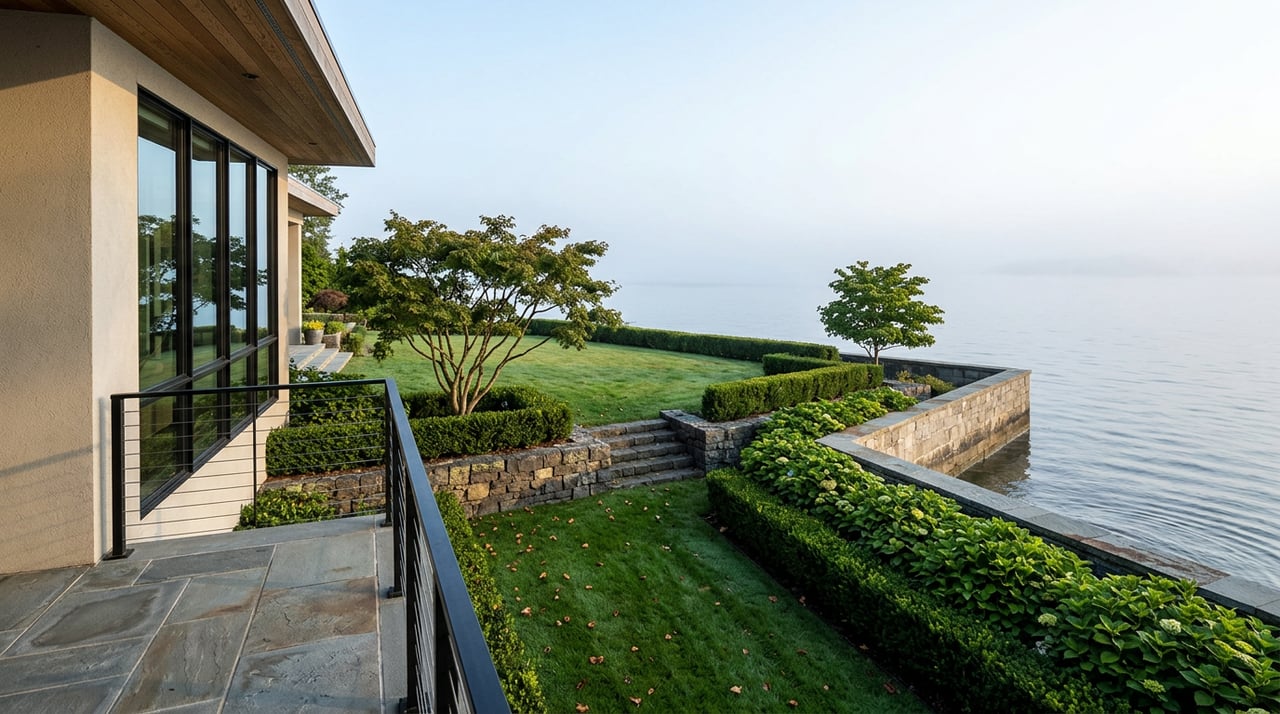
Some of the most appealing second-home properties in the Bellingham area are near the bay, lakes, or creeks. These homes can offer a remarkable lifestyle, but they also deserve a more careful review process.
The City of Bellingham’s Shoreline Master Program regulates development along Bellingham Bay, Lake Whatcom, Lake Padden, Chuckanut, Whatcom and Squalicum Creeks, and Padden Creek upstream to McKenzie Avenue. Whatcom County also manages shoreline use through its Shoreline Management Program to protect shoreline resources and direct development to suitable areas.
Whatcom County says shoreline development can involve concerns such as erosion, flooding, habitat loss, pollution, sedimentation, and loss of property. The county also notes that shoreline jurisdiction extends to uplands within 200 feet of the ordinary high-water mark.
If you are considering a waterfront or shoreline-adjacent home, that does not mean you should avoid it. It simply means your due diligence should be more intentional. You want to understand not just the home itself, but also what future improvements, repairs, or use changes may involve.
Treat rental potential as a separate question
Many buyers like the idea of a second home that could also generate occasional income. In Bellingham, that should be treated as a separate feasibility question, not as an assumed bonus.
In the City of Bellingham, short-term rentals are defined as stays of fewer than 30 consecutive nights. The city says short-term rentals require a land-use permit and additional conditions, including a business license, inspection, liability insurance, parking, and a local contact person.
In residential zones, the city says the dwelling used for the short-term rental must be the owner’s or long-term renter’s primary residence for at least 270 days each year. The whole unit may be rented no more than 95 days per year. The city also says short-term rentals are not allowed in the Lake Whatcom Watershed or shoreline areas.
That is a major point for second-home buyers. If your vision is a classic part-time retreat that you also rent when you are away, city rules may limit that plan depending on the property and location.
County rules also matter
If the property is outside city limits, you still need to verify the local framework. Whatcom County has its own adopted vacation-rental ordinance, Ordinance 2023-041, which regulates short-term and vacation rentals in several zoning districts.
The ordinance treats vacation rental units in the Lake Whatcom Watershed as conditional uses. It also defines a vacation rental unit as a single-family dwelling or accessory dwelling unit rented as a single unit for less than 30 days while the owner is not present.
This is why location matters so much. A home inside Bellingham city limits can face one set of rules, while a home in unincorporated Whatcom County may face another.
A smart checklist before you shop
If you want to stay focused and avoid missteps, start with a clear buying framework.
Second-home checklist for Bellingham
- Decide whether the home is for personal use only or if rental use matters to you at all
- Confirm whether the property is in Bellingham city limits, unincorporated Whatcom County, or shoreline jurisdiction
- Ask your lender how the property will be classified and what down payment or reserve expectations apply
- Budget for full carrying costs, not only the mortgage payment
- Inspect carefully for moisture, drainage, roof, and ventilation concerns
- Verify current city or county permit requirements before relying on rental income or short-term rental use
When you approach a second-home purchase this way, you give yourself more control. You can compare properties based on how they truly fit your goals, not just how they look online.
The right retreat starts with the right strategy
Buying a second home in Bellingham can be exciting, but it works best when the lifestyle vision and the financial plan support each other. The buyers who tend to feel best about their decision are the ones who get clear on use, budget honestly, and investigate location-specific rules before they fall in love with a property.
Whether you are looking for a low-maintenance retreat, a waterfront escape, or a distinctive home that fits a part-time lifestyle, thoughtful guidance matters. If you want a tailored, data-informed approach to your next purchase, Mari Moline can help you evaluate opportunities with clarity and confidence.
FAQs
What makes Bellingham appealing for a second home?
- Bellingham offers bay access, mountain views, extensive trails and parks, and relatively convenient regional access to Seattle, Vancouver, B.C., and the Canadian border.
What should you decide before buying a second home in Bellingham?
- You should decide whether the property will be for personal use only, shared family use, or a home where rental flexibility matters, because that can affect both financing and local rule compliance.
What down payment should you expect for a Bellingham second home?
- Freddie Mac’s published maximum loan-to-value for a second home is 90% on certain conforming purchase transactions, which implies planning for at least 10% down, though lenders may require more.
What ongoing costs matter for a second home in Bellingham?
- In addition to the mortgage, you should budget for taxes, insurance, HOA dues if applicable, utilities, maintenance, repairs, furnishings, travel costs, and reserve funds for vacant periods.
Why is maintenance especially important for a Bellingham retreat property?
- Bellingham has frequent precipitation, so moisture management, drainage, roofing, ventilation, and heating performance deserve close review, especially if the home will be vacant between visits.
Can you use a second home in Bellingham as a short-term rental?
- Possibly, but you should verify current city or county rules first because the City of Bellingham and Whatcom County have different regulations, and some areas have significant limits or prohibitions.
Why do shoreline properties in Bellingham require more due diligence?
- Shoreline-adjacent properties can involve added development review and site-specific constraints related to erosion, flooding, habitat protection, pollution, and other environmental considerations.