What exactly does a buyer acquire when they write an offer on a private dock in West Bellevue?
Most people assume the answer is simple: a structure. Something built, inspected, and conveyed the same way a roof or a furnace conveys. But a dock on Lake Washington is not just a structure. It is a permit history, layered across at least three government agencies, as GovLink's shoreline permitting guide describes. In a market where the water still commands a premium and moves fast even as the broader city cools, that permit history is doing more to set price and close timelines than the view, the square footage, or the address on the listing sheet.
The dock is a file before it's a structure
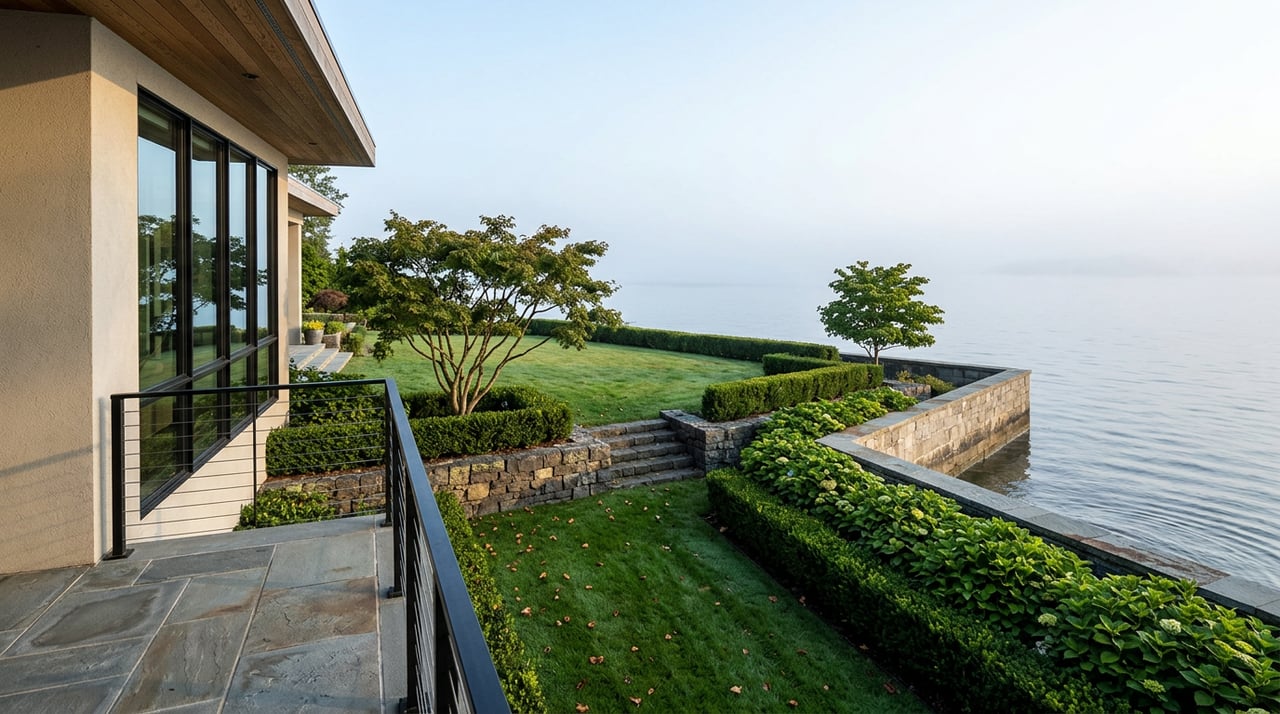
Every private dock on Lake Washington sits inside Bellevue's Shoreline Overlay District, a 200-foot band measured from the ordinary high water mark where the city's Land Use Code applies alongside state and federal shoreline law. A dock built decades ago carries whatever permit was issued at the time, and that permit, not the current condition of the wood or the pilings, is what a title company and a lender will ask to see. If the paperwork is thin, incomplete, or was never filed because the original owner assumed a handshake with the city was enough, it leaves a gap to investigate.
This is the part a listing photo never shows. A dock can look freshly stained and structurally sound while sitting on a permit that expired, was never converted after a 1990s repair, or predates the current shoreline code entirely. None of that shows up on a walkthrough. It shows up in escrow, usually late, usually as a surprise to whichever side didn't budget time for it.
Four names your buyer's file should already have
Before a marine engineer even climbs onto the dock, four names should already be in the file:
- City of Bellevue Development Services, which reviews the project against the Shoreline Overlay District standards in the Land Use Code and issues the local Shoreline Substantial Development Permit when one is required
- Washington Department of Ecology, which administers the state Shoreline Management Act and receives the city's decision for the record
- U.S. Army Corps of Engineers, which reviews in-water structures under federal law and runs its own Endangered Species Act consultation because Chinook salmon, steelhead, and bull trout all use Lake Washington
- Washington Department of Fish and Wildlife, which issues a Hydraulic Project Approval for any work below the ordinary high water mark, from bulkhead repair to pile driving
A dock that has cleared all four leaves a clean paper trail. A dock that has only ever touched one or two of them is the one that slows a closing down.
What changed this spring
Bellevue's shoreline code is not static, and treating a five-year-old blog post as current guidance is one of the more expensive mistakes a buyer can make. Ordinance 6906 passed the Bellevue City Council in March 2026 and was codified into the Land Use Code that May. Among its changes, the section governing residential shoreline regulations now points directly to the city's separate shoreline stabilization standards for how legally constructed bulkheads may be repaired or replaced going forward.
The practical takeaway is not the specific language of the amendment. It is that the rules governing bulkhead repair on Lake Washington were rewritten within the last few months, which means any due diligence built on an older summary, including much of what circulates informally among agents and buyers, is already out of date. A buyer's team needs to be checking the code as it reads today, not as it read two ordinances ago.
There is also a dollar threshold worth knowing. Washington Department of Ecology guidance says that, since August 2023, a dock replacement of equal or lesser footage than the original is exempt from the full Shoreline Substantial Development Permit process if its fair market value stays under $28,000. Thresholds like this one are tied to the same state statute that periodically adjusts for inflation, so a buyer or seller planning dock work that might brush up against that number should confirm the current figure with the city rather than rely on an older summary.
Why the water still moves fast while the median cools
In the three months ending May 2026, Bellevue's citywide median home sale price ran close to $1.5 million, down roughly 11 percent from the same stretch a year earlier, and the average time before a home went pending stretched from five days to eight. Read on its own, that looks like a market losing some heat.
West Bellevue's waterfront pocket has not followed that pattern. Listings along Lake Washington in Meydenbauer Bay, Enatai, and the Newport Shores canal community have continued moving in roughly 10 to 18 days through 2026, faster than the citywide pace even as the citywide median softened. The obvious explanation is scarcity of water frontage itself. The fuller explanation is that permit-clean moorage is scarce inside an already scarce category, and buyers who can verify a clean file move on those homes immediately, while homes with an unresolved permit question sit long enough for the softer citywide numbers to catch up with them.
That is the mechanism worth understanding before an offer goes in. Two homes with identical square footage, identical views, and comparable list prices can behave completely differently at the negotiating table depending on what their dock file says.
| Permitted, documented moorage | undocumented moorage | |
|---|---|---|
| Lender response | Standard jumbo underwriting | Additional scrutiny, possible escrow holdback |
| Timing | Clean-file listings have moved pending in 10 to 18 days | Permit research may extend the timeline |
| Resale position | Asset supports the price | An unresolved permit question |
The lender's version of due diligence
Most West Bellevue waterfront purchases in this price range are financed with jumbo loans, which already carry stricter underwriting than a conventional mortgage: higher credit thresholds, larger down payments, often 20 to 30 percent or more. Waterfront adds a layer most buyers do not expect. An aging bulkhead or a dock without a clear permit history is the kind of detail an underwriter flags as a red flag on the file itself, separate from the borrower's financial picture.
The cost exposure explains why. A new residential dock on Lake Washington runs anywhere from $75,000 to well over $250,000 depending on materials and whether a boat lift is included, and the permitting process alone can take more than a year once it clears the exemption threshold. Bulkhead repair or replacement runs $50,000 to $300,000 or more depending on linear footage and construction type. For homes on FEMA flood zones A or AE, add $3,000 to $10,000 or more a year in flood insurance. For the smaller number of older waterfront homes still on septic rather than sewer, add a system inspection to the list, since King County's requirements near shorelines have tightened in recent years.
None of these numbers are disclosed the way a roof age or an HVAC service date typically is. They surface only when someone asks the right question of the right agency, which is exactly why the question needs to be asked before the offer, not after the inspection contingency has already expired.
What this changes before you write an offer
The financial discipline that makes sense of a $2 million lot line is the same discipline that makes sense of a dock permit file: verify before you commit capital, and treat the paper trail as part of the asset, not an afterthought to it. A buyer's agent who pulls the Bellevue shoreline permit history, checks it against the current code, and asks the seller's side for the Army Corps and WDFW documentation before drafting an offer is doing the analytical work that protects a client from a six-figure surprise mid-escrow. A seller who assembles that file in advance is doing the same work in reverse, and it shows up as a faster, cleaner sale.
Chism Beach Park and Mercer Slough Nature Park remain the public reminders of why this stretch of shoreline draws buyers in the first place. The private docks tucked behind them are a different kind of asset, one that rewards the buyer and seller who treat the permit history with the same seriousness as the price.
A few questions worth asking early
Does a dock permit automatically transfer to a new owner? A buyer should confirm the permit matches the dock as it currently exists, not just as it was originally approved.
How long does new dock construction realistically take in Bellevue? Once a project exceeds the $28,000 exemption threshold, plan for the permitting process alone to run over a year given the number of agencies involved, before construction even begins.
Should a buyer rely on the seller's disclosure for bulkhead condition? Many owners of older waterfront homes were never told the original permit history when they bought the property themselves. A buyer should commission an independent marine inspection of the dock and bulkhead rather than rely on disclosure alone, since a seller may have no current knowledge of a decades-old permit's status.
Waterfront transactions in West Bellevue reward the buyer and seller who do this work early and the agent who knows exactly which four names belong in the file before an offer is written. If you're weighing a purchase or sale along Lake Washington and want a second set of eyes on the permit history before you commit, Mari Moline offers a VIP consultation built for exactly this kind of decision. Schedule your VIP consultation to start with the file, not just the photos.
This article is general information, not legal, tax or financial advice. Consult a qualified professional about your situation.